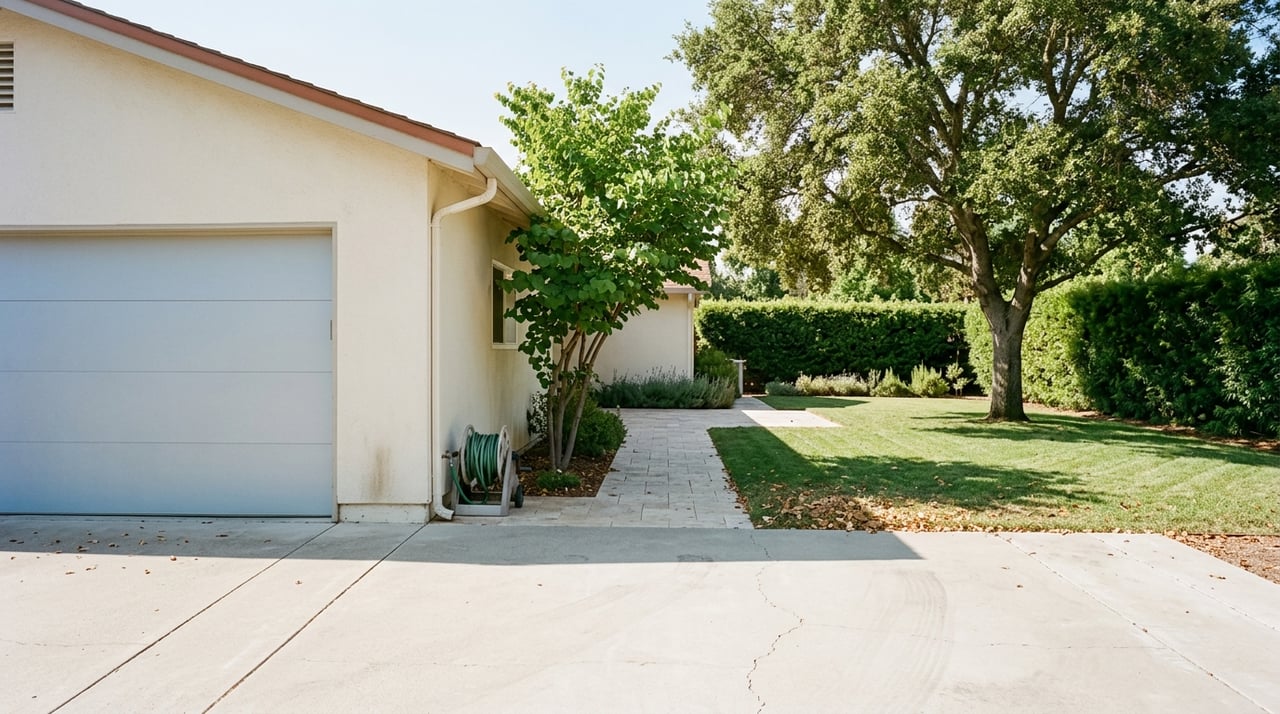
The Turlock Housing Cost That Never Shows Up on a Listing Sheet
Pull up two homes side by side. Same square footage, same year built, same asking price down to a few thousand dollars. One sits in Turlock. The other sits fifteen minutes away in a similarly priced Central Valley neighborhood served by Pacific Gas and Electric. On paper, on Zillow, on the comparison spreadsheet a buyer builds before making an offer, these two houses look like the same purchase. They are not, and the difference shows up every month on a bill that never gets attached to the listing.
Turlock's power comes from Turlock Irrigation District, a public power provider that has sold retail electricity to local homes, farms, and businesses since 1923. TID is one of only four irrigation districts left in California that still does this instead of leaving electric service to an investor-owned utility like PG&E. A board presentation delivered this July by Amy Peterson, TID's manager of rates and risk, laid out just how wide that difference has grown. For an average residential customer using 875 kilowatt hours a month, TID billed 17.68 cents per kilowatt hour. PG&E billed 38.93 cents for the same usage. That is not a rounding difference. That is a bill more than double.
Peterson's presentation didn't stop at PG&E. She stacked TID against Modesto Irrigation District, Merced Irrigation District, and Sacramento Municipal Utility District, using 2025 TID customer data to model what an average household would pay under each utility's rate structure. Here is where residential service landed:
| Utility | Rate per kWh (avg. residential use) |
|---|---|
| Turlock Irrigation District | 17.68¢ |
| SMUD | 19.62¢ |
| Modesto Irrigation District | 22.58¢ |
| Merced Irrigation District | 23.04¢ |
| PG&E | 38.93¢ |
Peterson was careful to flag the limits of the exercise. The model depends on what TID defines as an average customer, and she noted that another utility running the same comparison with its own customer data "might come up with a little bit different cents per kilowatt hour." That caveat matters. This is not a guarantee that every Turlock household saves a fixed dollar amount. But the gap between TID and PG&E is wide enough that the caveat barely moves the conclusion.
Run the math on that 875 kWh baseline and the difference works out to roughly $186 a month, or close to $2,200 a year, for a household on TID's rate instead of PG&E's. Commercial and farm accounts see a similar pattern. TID billed commercial customers 16.26 cents against PG&E's 40.42 cents, and farm service accounts 15.85 cents against PG&E's 38.01 cents. For the landowners and small business buyers who make up a good share of Turlock's real estate market, that spread compounds over a full year of operation, not just a household's summer air conditioning bill.
The rate difference isn't a fluke of good management. It's a structural difference in who owns the utility. TID was formed in 1887 as the first irrigation district in California, and it began selling retail electricity to homes and farms in 1923. It is governed by a five member board elected by residents within the district's boundaries, not by shareholders expecting a return. Its power comes from a mix of sources it owns outright, including hydroelectric generation at Don Pedro Reservoir on the Tuolumne River and wind generation from the Tuolumne Wind Project, rather than being purchased entirely on the open market and passed through to customers at a markup.
That ownership structure is also why TID's rates move differently than PG&E's. In December 2022, natural gas prices spiked and TID's Power Supply Adjustment, the mechanism the district uses to true up its power costs twice a year, shifted from a half-cent per kilowatt hour credit to a half-cent charge. Once gas prices settled, TID moved the adjustment back to a credit in June 2024, a one cent per kilowatt hour swing in the customer's favor. It is worth saying plainly that TID did raise its base rates this year for the first time in a decade, citing the cost of serving growing demand and meeting state climate requirements. Even after that increase, the gap to PG&E remains wide enough that it still functions as a real cost advantage for anyone buying inside TID's footprint.
Here is the part a buyer moving into the area from outside rarely thinks to check. TID's electric service area covers 662 square miles, reaching into parts of Stanislaus, Merced, Tuolumne, and Mariposa counties, and it includes Turlock along with Ceres, Hughson, and Keyes. That sounds like a tidy regional footprint, but the line dividing TID territory from PG&E territory has never been fixed to a map of city limits. It has moved by negotiated agreement between the two utilities. In the early 2000s, PG&E and TID renegotiated their shared service boundary and transferred an entire zone near Patterson and Crows Landing, referred to in the agreement as the Westside Zone, out of PG&E's territory and into TID's.
That history matters for a very practical reason. If a utility boundary can be redrawn by two companies signing an agreement, it can also run through the middle of what looks, from the street, like one continuous neighborhood. A parcel a few blocks from Turlock's edge, or a home in unincorporated county land near the city, is not automatically on TID service just because the mailing address says Turlock or the county road connects directly to a TID-served subdivision. The only way to know which utility serves a specific address is to check that address, not the town it's associated with on a listing site.
None of this changes what a home costs to buy. It changes what a home costs to keep. As of June 2026, Zillow's home value index put the typical Turlock home at $461,563, down 2.7% over the prior year. Homes actively listed for sale in August 2026 carried a median asking price closer to $555,000, according to Movoto's tracking of current listings, a gap that reflects the difference between an estimated market value and what sellers are currently asking. Either figure, set next to a comparably priced home in a PG&E-served part of the region, understates the real gap in what ownership costs month to month.
For a buyer comparing Turlock against a similarly priced listing in Merced or a Modesto-adjacent neighborhood on PG&E service, the honest way to run the comparison is to treat the utility difference as part of the housing cost, not a footnote to it. A couple thousand dollars a year in electricity is not enough to change which house someone loves. It is enough to change what a household can comfortably afford to offer, and it is the kind of number that never appears in a portal's estimated monthly payment calculator.
A few things worth doing before treating any Central Valley comparison as apples to apples:
Does every home inside Turlock city limits get TID electric? Most do, since Turlock is the district's namesake city, but confirm the specific address rather than assuming based on the mailing city. Homes near the edges of town or on county land nearby are the ones worth double-checking.
Will TID's rates stay this far below PG&E's? There is no way to promise a specific future number. TID raised rates this year for the first time in ten years, and its Power Supply Adjustment moves twice a year based on actual power costs. What the July 2026 comparison shows is the gap as it stands right now, not a permanent guarantee.
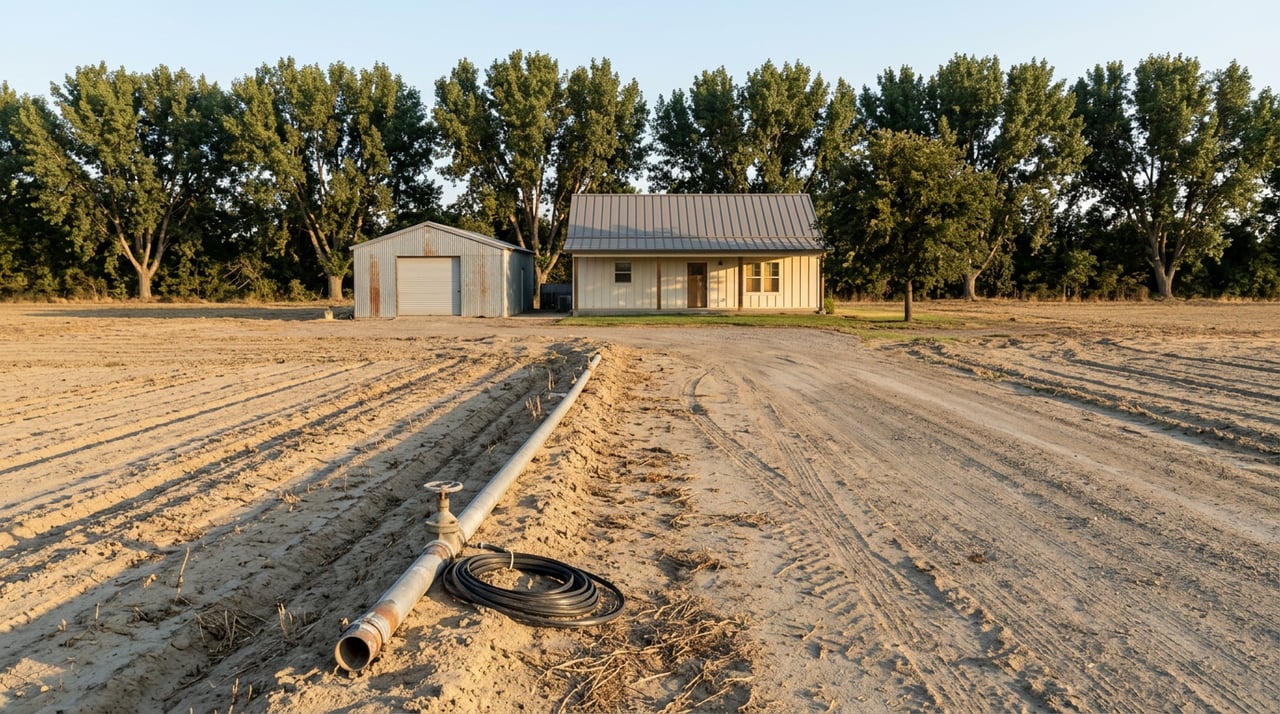
Does this affect farmland and rural buyers too? Yes, and arguably more. Farm service and commercial rate categories show the same wide spread to PG&E, which matters for anyone evaluating agricultural or mixed-use property where electricity runs pumps, processing equipment, or outbuildings year round.
A home's price tag is the number everyone compares. The utility that serves it is the number almost nobody checks until the first bill arrives. If you're weighing a Turlock property against something similarly priced elsewhere in the Central Valley, that's a conversation worth having before you write an offer, not after you move in. Christine Kinsley has spent more than two decades helping Central Valley buyers see the full cost picture behind a listing price. Let's Connect.
Stay up to date on the latest real estate trends.

Want an agent who'll really listen to what you want in a home? Need an agent who knows how to effectively market your home so it sells? Give me a call! I'm eager to help and would love to talk to you.