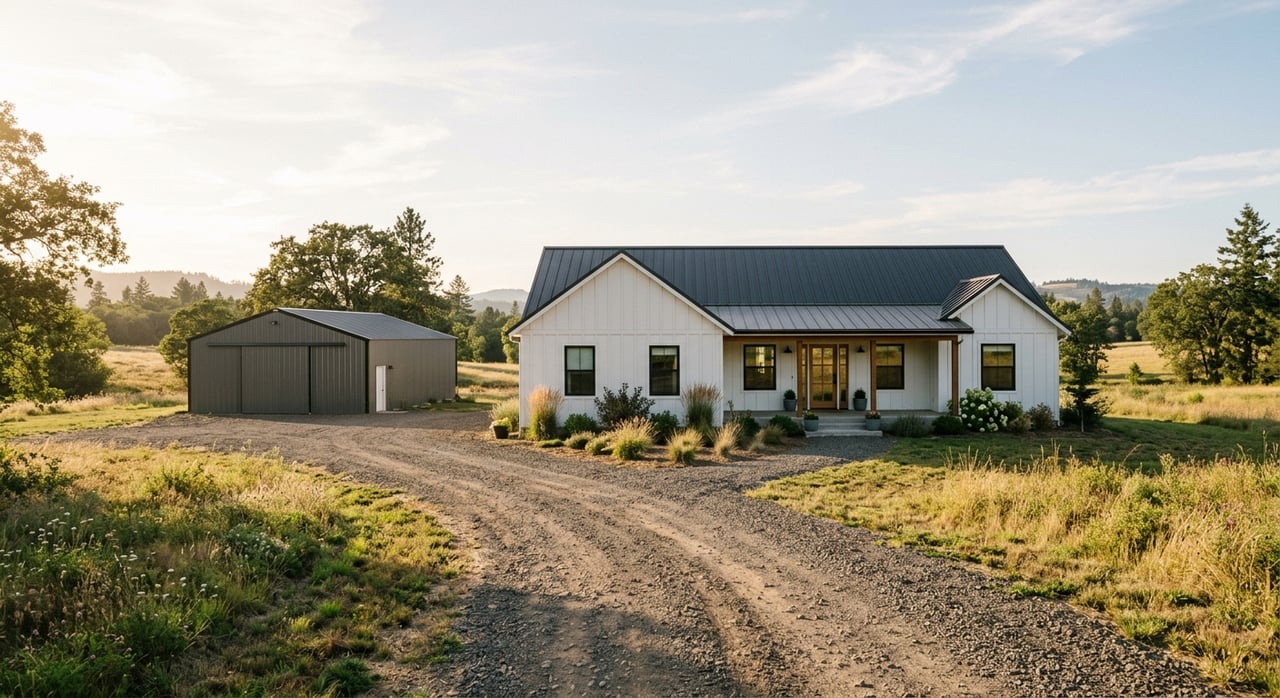
Buying Small Acreage Near Madera: Key Things To Know
If you are dreaming about a little more space near Madera, small acreage can sound like the best of both worlds. You get room for a shop, animals, extra parking, or future plans, but rural property often comes with a very different set of rules than a standard in-town home. Before you buy, it helps to know what can affect access, utilities, permits, and long-term usability so you can make a smart decision with fewer surprises. Let’s dive in.
One of the first things to confirm is whether a parcel is inside the City of Madera or in unincorporated Madera County. That single detail can shape how the property is served, what rules apply, and which department oversees future improvements.
Inside the City of Madera, the city provides services such as water, sewer, drainage, street sweeping, garbage, recycling, and green-waste collection. City zoning also reflects a more compact residential pattern, with districts like RA, R1, R2, and R3 tied to smaller lot sizes and higher densities than rural acreage.
Outside city limits, Madera County Planning handles zoning and subdivision enforcement, mapping, and agricultural-preserve applications. County rules regulate land use, structure placement, lot dimensions, access, parking, and loading, so acreage property should never be evaluated the same way you would evaluate a typical in-town lot.
A small acreage parcel may look flexible, but zoning still controls what you can do with it. That matters if you are thinking about animals, adding structures, creating multigenerational space, or making changes later.
Madera County includes rural single-family districts such as RRS-2, RRS-5, and RRS-10. Those district names reflect 2-acre, 5-acre, and 10-acre minimums, which means parcel size and zoning fit should be verified early if you are considering a split, expansion, or a specific use.
County code also makes clear that a site or structure may be used only as permitted by right, by zoning permit, or by conditional use permit. In practice, that means your ideas for a guest home, second dwelling unit, home occupation, or hobby-use setup need to be checked against the current rules rather than assumed.
Zoning is not just about your current plans. It also affects how easily a future buyer can understand and finance the property.
Parcels with a clear zoning fit, documented access, known utility setup, and permitted improvements are usually easier for future buyers to evaluate. If a property has unclear uses or unpermitted additions, it can raise more questions during escrow.
On small acreage, the road to the property matters almost as much as the property itself. Access affects convenience, maintenance costs, and emergency response.
Madera County Public Works maintains county roads and bridges, but the county also recognizes privately owned and maintained roads that are not generally open to the public. A road does not become part of the county-maintained road system unless the Board of Supervisors formally accepts it.
That is why you should ask whether the property is served by a county-maintained road, a privately maintained road, or a recorded easement. Each setup can affect who handles upkeep, how access rights are documented, and what you may need to budget for over time.
For rural property, a driveway is more than a convenience feature. It can be part of the approval process for use, construction, and safety.
Madera County’s building submittal process includes Road Department review for driveway approaches and access to county roads, along with encroachment permits. The Fire Marshal may also review driveway turnouts, water storage tanks, hydrants, sprinkler systems, State Responsibility Area issues, and other fire-related requirements.
Engineering review can also come into play for flood zones, grading, and drainage. So if a parcel looks simple at first glance, the actual build or improvement path may still involve several layers of review.
Utilities are one of the biggest differences between in-town property and acreage near Madera. Before you move forward, confirm whether the parcel is connected to city water and sewer, served by a public district, using a private well and septic system, or some mix of those services.
Madera County Environmental Health is the permitting and enforcement agency for water well construction and destruction. The county’s Liquid Waste Program regulates onsite wastewater treatment systems, including septic oversight, inspections, and enforcement.
This is a major due diligence step because private systems bring different responsibilities than city services. If the property relies on a domestic well, water quality testing becomes especially important.
The California State Water Resources Control Board recommends annual testing for domestic well water quality. It also notes that private domestic wells are not regulated like public water systems, which means testing responsibility falls to the owner.
For you as a buyer, that means well records, well condition, and water testing should be part of the conversation early. A beautiful parcel can feel very different once you understand the true condition of its water source and wastewater system.
Many buyers want small acreage because they need more than just a house. You may want a barn, shop, shed, extra storage, or room for equipment.
Madera County says accessory structures must be subordinate and incidental to the primary use of the property. If an accessory structure is built before the main house, it needs an approved zoning permit and an operational statement.
The county also notes that accessory structures go through a ministerial building permit process, and one-story detached sheds under 120 square feet are exempt from building permits. Even then, planning approval may still be needed for location, so it is wise to verify permits instead of relying on assumptions.
When you are evaluating a property, ask for permit information on the well, septic system, ADU, barn, shop, fence, and driveway improvements. That helps you understand what was approved, what may need follow-up, and whether the property is likely to create issues later.
This step is especially important on rural property, where improvements may have been added over time. A clean permit trail can make ownership simpler and future resale smoother.
If you are buying acreage for family flexibility, Madera County offers useful options in some cases. The county publishes an ADU how-to guide and offers pre-approved ADU plans in unincorporated areas.
That can be helpful if you are considering space for extended family or a separate living area in the future. Still, you should confirm zoning, permits, site constraints, and utility capacity before assuming an ADU plan will work on a specific parcel.
Acreage often makes buyers think they can automatically keep animals or start a hobby farm. In reality, those plans should be checked against county code first.
Madera County defines small livestock farming as keeping more than 12 chickens, turkeys, pigeons, ducks, geese, guinea fowl, or similar fowl, or animals such as sheep or goats, or any fowl or animals for commercial purposes. The county also has home-occupation and cottage-industry rules intended to keep nonresidential uses compatible with residential areas.
If your goal includes livestock, small-scale production, or a home-based business use, it is smart to verify exactly how the parcel is zoned and what permits may apply.
Fire-related requirements are a key part of buying acreage in this area. They can affect setbacks, access, water storage, and how the land is maintained.
CAL FIRE states that 100 feet of defensible space is required by law. Madera County also says parcels one acre and larger in State Responsibility Area fire-protection areas must comply with PRC 4290 setback requirements.
The county fire division provides plan review and inspections for unincorporated areas. For you, that means a property’s location in a fire-related jurisdiction is not a side detail. It can influence both current use and future building plans.
Some acreage parcels may fall under agricultural-preservation programs. Madera County identifies the Williamson Act Program as a county effort to preserve open space, agricultural land, and recreational areas.
The Assessor also uses an agricultural questionnaire for properties enrolled in the Williamson Act, Ag Preserve, or Farmland Security Zone. If a parcel is part of one of these programs, it is worth understanding that status early so you know how it fits your ownership goals.
If you are seriously considering buying small acreage near Madera, use this checklist as a starting point:
Buying small acreage near Madera can be a great move if the property matches your goals and the details check out. The key is knowing that acreage buying is often more layered than buying a house on a standard subdivision lot.
When you understand zoning, access, wells, septic, permits, fire rules, and future-use limits up front, you put yourself in a better position to buy with confidence. If you want practical guidance on rural property, land use considerations, and Central Valley real estate, Christine Kinsley can help you navigate the details with a local, experienced perspective.
Stay up to date on the latest real estate trends.
Want an agent who'll really listen to what you want in a home? Need an agent who knows how to effectively market your home so it sells? Give me a call! I'm eager to help and would love to talk to you.